A dog harness with a handle gives you a second point of control when you need it—curbs, crowded sidewalks, car doors, trail bottlenecks, or a quick steady while you buckle a seat belt. This guide explains when a top handle helps, when it does not, what to look for in webbing and stitching, and how a handle harness differs from a lift harness for mobility support.
If you want a ready example with a reinforced grab handle, MOLLE panels, and no-pull clip options, see the Tactical No-Pull Dog Harness with handle. For trail-specific fit and packing tips, pair this page with our best dog harness for hiking guide. New to buckling one on? Start with how to put on a dog harness.
What is a dog harness with a handle?
Most everyday harnesses have D-rings for the leash. A handle harness adds a grab loop or rigid handle on the back—usually above the shoulders or mid-back—so you can briefly guide, steady, or lift the front end of the dog without grabbing fur or a collar. Handles appear on tactical, service-style, and many hiking harnesses because those activities involve stairs, rocks, and tight spaces where a leash alone is awkward.
The handle is a control aid, not a full-body crane. For heavy dogs that need help into a car or up stairs every day, ask your vet about a dedicated rear-support or full-body lift harness; a top handle alone is not designed as a mobility hoist.
When a handle harness helps
- Curbs, stairs, and trail steps: a short lift of the chest helps smaller or cautious dogs clear a high step without yanking the neck.
- Getting in and out of the car: steady the dog while you clip a car seat belt or tether to the harness D-ring.
- Crowds and doorways: a one-handed hold keeps a strong dog from surging through a gap while your other hand manages keys or a second leash.
- Training resets: a brief handle hold can pause a spin or jump without choking up on the leash.
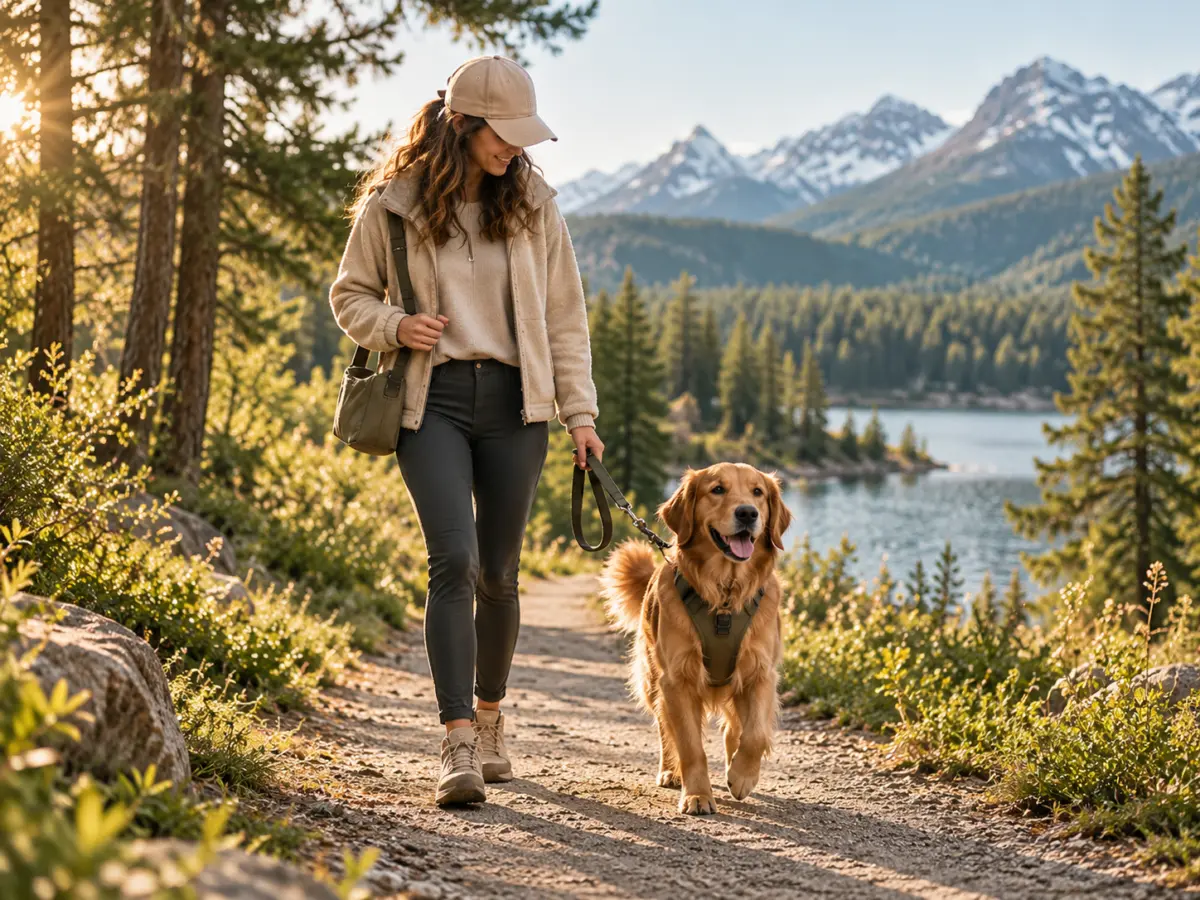
- Water edges and uneven ground: hiking and camping often favor padded harnesses with handles—see the hiking harness guide.
When you can skip the handle
- Calm toy breeds on flat neighborhood walks that never need a boost.
- Dogs that panic when anything touches their back—introduce the handle gradually or choose a low-profile harness.
- Situations that need true lifting of the entire dog (injured rear end, advanced mobility issues)—use purpose-built support gear recommended by your vet.
Buying criteria for a dog harness with handle
- Handle construction: reinforced stitching where the handle meets the panel; a padded or tubular grip beats a thin strap that cuts into your hand.
- Chest and belly fit: the handle is useless if the harness slides. Size by chest girth and use the two-finger rule—details in how to put on a dog harness.
- Leash attachment options: back D-ring is standard; a front clip helps with pulling. Dual-clip tactical styles cover both.
- Padding and breathability: wider chest panels spread pressure; mesh or vents help on long summer hikes.
- Hardware: metal D-rings and sturdy buckles for medium/large dogs; inspect stitches around the handle after rough use.
- MOLLE or accessory panels (optional): useful for light pouches on long days—do not overload a dog’s back.
- Size range: our tactical harness runs medium through XL—not for tiny toys. Small dogs should use a lightweight harness and only choose a handle model if the size chart truly fits.
Handle harness vs tactical vs hiking harness
These labels overlap. “Tactical” usually means tougher webbing, a handle, and modular panels. “Hiking” emphasizes trail comfort, reflective trim, and sometimes a handle for scramble assists. A dog harness with handle search often lands on both. Pick by fit and use case first; the marketing name second.
The PawFurvia Tactical No-Pull Dog Harness combines a top handle, MOLLE-style panels, and no-pull-oriented clip points for medium and large dogs. If your main goal is trail miles, read the hiking guide for layering, paw care, and pack weight rules that go beyond the handle itself.
How to use the handle safely
- Brief assists only: lift the chest for a second or two to clear an obstacle; do not carry the dog’s full weight by the handle for long distances.
- Support the rear when needed: for car entries, guide the back end with your other arm or a ramp—do not crank the front up alone on a heavy dog.
- Never use the handle instead of a leash in public; keep the leash clipped as backup.
- Check fit first: a loose harness + handle grab = the gear shifts into the armpits. Fit-check after putting the harness on.
- Watch for hot spots: after the first long walk, look under the chest panel and armpits for redness.
Tip: Practice a “handle touch → treat” indoors so your dog does not flinch when you grab the loop at a busy curb.
Sizing and first fit
Measure chest girth at the widest rib, then compare to the product size table. Aim for the middle of a size range when you can. Between sizes, stronger pullers often do better in the snugger option if the two-finger rule still passes; deep-chested breeds may need the larger size so the handle sits centered, not listing to one side. Full charts: dog harness size chart by weight and breed and how to measure your dog.
Recommended next steps
- Shop the handle model: Tactical No-Pull Dog Harness with handle
- Trail context: best dog harness for hiking
- Put-on practice: how to put on a dog harness
- Browse all styles: dog harnesses
Pawfurvia ships to the US in 7–12 business days, free shipping on orders over $59, 30-day returns. Questions on sizing a handle harness? Email [email protected] or message us on WhatsApp 24/7.
FAQ
What is a dog harness with a handle for?
Short assists—stairs, car entries, crowds, and trail steps—so you can guide the chest without grabbing the collar or fur. It is not a substitute for a leash or a full mobility lift harness.
Is a tactical harness the same as a harness with a handle?
Many tactical harnesses include a handle, but not every handle harness is “tactical.” Focus on fit, padding, and D-ring placement; treat “tactical” as a style family.
Can I lift my whole dog by the harness handle?
No. Use the handle for brief chest assists only. Full-body lifts need vet-approved support gear and often a second point under the rear.
What size tactical harness with handle should I buy?
Size by chest girth against the product chart (our tactical harness is M–XL). If your dog is small or toy-sized, choose a lightweight harness that actually lists their girth—do not force a large tactical frame.
Should I use the handle or the leash on hikes?
Keep the leash clipped for control; use the handle for scramble assists and tight spots. More trail tips: our hiking harness guide.