Last updated: October 29, 2026
This page is a buyer’s shortlist: what to look for on a product page and in the box before you pay for a “no-pull” harness. It is not a full training or “do they magically stop pulling” essay—that deeper discussion lives at No-Pull Harness: What Actually Helps. Read that when you want expectations and training limits. Stay here when you want a shopping checklist.
One honest premise up front: a no-pull harness changes leverage. A chest (front) attachment can turn a pulling dog toward you instead of letting them lean straight into a back ring. Without loose-leash practice, most dogs still learn to pull. Buy for fit and features first; treat behavior change as a separate project.
Feature checklist (print or save this)
| Feature | Why shoppers want it | What to verify on the PDP |
|---|---|---|
| Y-front / chest panel | Keeps walking force on the sternum and frees shoulders | Photos show a low chest path, not a high throat strap |
| Front clip or dual clip | Front for training moments; back for relaxed walks | Exact ring locations labeled; decorative loops ≠ leash rings |
| Padding at chest / belly | Reduces rub on short coats and armpits | Padding width; care instructions (air dry vs machine) |
| Secure buckles | Limits accidental release on strong dogs | Side-release quality; locking options if listed |
| Independent neck + chest adjusters | Deep chests and escape-prone dogs need both | Adjustment range in inches/cm—or “ask support” if missing |
| Top handle (optional) | Brief close control near traffic or doors | Stitching through load paths; not a free lift rating unless stated |
| Reflective trim | Dawn/dusk visibility | Where reflective panels sit |
For clip mechanics without turning this into a second training guide, use front-clip vs back-clip dog harness.
Design types at a shopping glance
| Design | Shopping signal | Best when | Watch for |
|---|---|---|---|
| Front-clip only | One chest D-ring highlighted as leash point | You mainly need steering during training | Leash may tangle near front legs |
| Dual-clip | Front + back rings both rated for leash use | You want one harness for training and calm walks | More straps to adjust correctly |
| Back-clip only | Only a dorsal ring | Dog already walks loosely; comfort priority | Little steering effect; can feel like a sled hitch if they pull |
| Y-front + handle | Handle + adjustable Y chest | Active or larger dogs needing brief holds | Chest sizing must be accurate |
Size chart use (do this before the cart)
- Measure chest at the widest point behind the front legs and neck at the harness line. Step-by-step: how to measure your dog.
- Compare your numbers to that product’s table—not a generic breed guess. Overview help: size chart by weight and breed.
- If the PDP says ranges are unpublished, email measurements to [email protected] before choosing a letter size.
- Between sizes: prefer the size that matches chest first, then fine-tune straps; never “size down to be safe” on muscular or deep-chested dogs.
Fit check after unboxing (all sizes)
- Two fingers under straps—snug, not tourniquet-tight.
- Chest strap on the breastbone, not chopping the shoulder joint.
- Belly/chest strap behind the elbows, not riding the soft belly.
- Gentle reverse test: the dog should not easily back out when you lift forward on the harness.
- After a short indoor walk, check armpits for rub—poor fit causes more problems than brand names.
By dog size (shopping notes)
Small dogs (often under ~20 lb): prioritize light mesh, small hardware, and easy buckles so the harness does not weigh them down. Example with published bands: Breathable Small Dog Harness—breathable mesh with nylon webbing, front D-ring, neck + chest adjustments; Small chest 13–18" (33–46 cm), Medium 16–24" (40.5–61 cm) per the live product page. Soft CTA only if your tape matches.
Medium and large dogs: look for padding, secure buckles, and often a top handle. The Tactical No-Pull Dog Harness lists Oxford fabric and nylon webbing, padded mesh lining, top handle, MOLLE-style panels, and sizes M, L, XL. Gap: verified chest/neck ranges are not published—measure and confirm with support before ordering.
Browse styles in the harnesses collection only after you have numbers written down. Collar vs harness safety context: dog harness vs collar.
Red flags on product pages
- “Stops pulling instantly” with no fit or training caveats.
- Size letters with no inches/cm and no way to ask for fit help.
- Unclear which rings are leash-rated versus accessory loops.
- Photos that show the front strap high on the throat.
- No care or hardware-inspection guidance for daily wear.
Pair the purchase with a plan (one short paragraph)
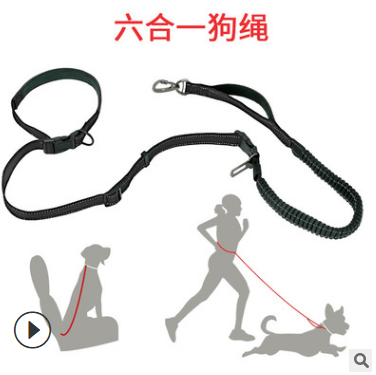
After you buy, keep early sessions short: stop or change direction when the leash goes tight; reward slack. A hands-free waist leash suits dogs that already walk reasonably well—not as a first tool for hard surges. Soft option once manners exist: hands-free running waist leash. For why gear alone is not enough, open what actually helps.
Shipping, returns, and sizing help
US delivery is typically 7–12 business days from dispatch. Free shipping often applies over $59—see checkout and the shipping policy. If chest fit is wrong, use the returns & refunds window (generally 30 days from delivery). Sizing questions: [email protected].
Hardware and materials to scan on the product page
- Webbing and shell fabric: nylon or Oxford shells with mesh lining are common for daily walking harnesses; note care steps (hand wash / air dry) so you can keep padding clean.
- D-ring metal: look for clear photos of weld or forged rings; avoid buying if the only ring shown looks like a thin decorative loop.
- Buckle type: side-release buckles should seat with a positive click; locking designs add a step but can help on strong dogs if the PDP documents how the lock works.
- Stitching: bar-tacks at handle bases and chest junctions matter more than colorways.
- Weight: if listed, use it as a clue for small dogs—overbuilt hardware can bounce on a tiny chest.
None of these details replace a tape measure. They simply help you discard weak listings before you invest time in sizing emails.
Escape-resistant does not mean escape-proof
Marketing sometimes implies a harness cannot be escaped. In practice, you improve odds with independent neck and chest adjustments, a snug (not crushing) fit, and management around open gates. Houdini dogs can still reverse out of oversized neck openings. After fitting, run a calm reverse test indoors and fix gaps before the first busy sidewalk. If your dog has a history of slipping gear, ask support whether a given model’s geometry suits reverse-outs—and keep a second layer of management (secure yard, shorter leash near exits).
Checklist you can take to checkout
- Chest and neck numbers written with units.
- Clip configuration matches your plan (front, back, or dual).
- Padding and buckle notes match coat type and strength.
- Size table present—or support contacted for unpublished ranges.
- Return window understood if the first size misses.
- Training expectations set via the deeper no-pull article—not this shopping list alone.
FAQ
Do no-pull harnesses hurt dogs?
A correctly fitted front-clip or dual-clip harness should not. Discomfort usually comes from straps that are too tight or that rub behind the front legs—recheck fit weekly.
Is a front-clip or back-clip better for pulling?
Front-clip offers more steering for pullers; back-clip is often more comfortable once the dog already walks loosely. Dual-clip lets you switch. Details: front vs back clip.
Can small dogs wear a no-pull harness?
Yes. Many small dogs do better on a light harness than on collar pressure. Match the published chest range and keep hardware light.
Will buying a no-pull harness replace training?
No. Buy for leverage and comfort; train for lasting loose-leash skills. See what actually helps.
What if the size chart is missing?
Do not guess from weight alone. Measure chest and neck, then ask the seller to confirm the letter size—PawFurvia support can help for unpublished tactical ranges.