Last updated: October 29, 2026
Quick answer: A front-clip harness puts the leash ring on the chest; a back-clip harness puts it on the dog’s back. Front attachment can help redirect a dog during training. Back attachment often feels more comfortable for calm, loose-leash walking. Neither attachment guarantees less pulling or perfect comfort—fit, activity, and training still decide the outcome.
This page deepens the comparison and switching rules. It is not the full “do no-pull harnesses magically work” article (what actually helps) and not a breed fit guide. For shopping features across brands, see the buyer checklist at how to choose a no-pull dog harness.
Front clip vs back clip at a glance
| Feature | Front attachment | Back attachment |
|---|---|---|
| Ring location | Chest / sternum area | Between the shoulder blades on the back |
| Leash path | May cross near front legs when the dog turns | Usually clearer of the legs; watch overhead snags |
| Pulling / training | Can turn the dog toward you; still needs rewards and timing | Little steering; can feel like a sled hitch if the dog leans hard |
| Comfort on long sniff walks | Sometimes more leash awareness for the dog | Often preferred once manners are solid |
| Running / hands-free | Follow both product instructions; not automatic | Common for hands-free once the dog is steady |
| Fit dependency | Attachment label means nothing if straps ride into the throat or armpits | |
What “front clip helps” actually means
When a dog surges forward on a front ring, the leash can rotate their body sideways toward the handler instead of letting them brace straight ahead. That momentary change of direction is useful during training. It is not punishment gear, and it is not a guarantee. Dogs can learn to pull on a front clip too if every surge still gets them where they want to go.
Back clips shine when you want a predictable leash path for a dog that already walks near you, or when you are not actively shaping loose-leash skills on that outing.
When to choose front clip
- Adolescent or adult dogs practicing not to surge past distractions.
- Short city blocks where you need frequent redirection.
- Early sessions after you change neighborhoods or add new triggers.
- Handlers who can manage occasional front-leg leash wraps calmly.
When to choose back clip
- Dogs with reliable loose-leash walking on familiar routes.
- Longer relaxed walks where constant steering is unnecessary.
- Some running or hands-free setups—only if product instructions support it and the dog does not lunge hard.
- When a front clip consistently tangles or rubs despite correct fit.
When to switch mid-walk or mid-week (dual-clip harnesses)
If your harness has both rings rated for leash use:
- Start on the front clip through the busy first block past the door (highest arousal).
- Switch to the back clip once the dog settles into a sniffing pace on quieter streets.
- Return to the front clip before known trigger zones (dog park fence line, skate park, busy cafe patio).
- End the walk on whichever clip keeps the dog under control for door manners at home.
Only attach to rings the manufacturer designates as leash points. MOLLE panels, decorative loops, and accessory D-rings are not automatically load-rated for walking force.
Fit first—before you compare labels
- Measure chest and neck; compare to the model’s range (measuring guide; size chart overview).
- Follow that harness’s fitting steps—finger rules alone are incomplete.
- Do a short supervised walk in a secure area; watch for rotation, rub, and leash wrap.
- Stop and readjust if the front strap climbs toward the throat when the dog pulls.
Collar still holds ID tags even when the leash is on a harness: harness vs collar.
Common mistakes
- Buying “front clip” and never practicing rewards for slack leashes.
- Using a back clip on a hard puller near traffic because it “feels simpler.”
- Clipping to a non-leash ring because it was convenient.
- Assuming a top handle means the harness is rated for lifting the dog’s full weight.
- Judging clip type while the harness is two sizes too big.
Product notes (soft, verified)
Browse attachment configs in the harnesses collection. Example with a handle and MOLLE-style panels: tactical walking harness (Oxford + nylon, padded mesh, sizes M/L/XL). Confirm which rings are leash-rated on the current PDP; chest ranges are not published—ask support with measurements. For small/medium mesh with a front D-ring: breathable small dog harness (S 13–18" / M 16–24" chest per PDP).
Trail-specific strap layouts: hiking harness guide. Small long-backed breeds: small-dog and Dachshund guide.
Leash pairing with each clip
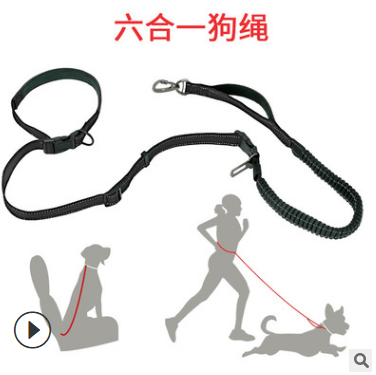
- Front clip: shorter fixed leash reduces wrap risk; traffic handle helps (6-in-1 leash length about 156–252 cm adjustable—confirm on PDP).
- Back clip: standard 4–6 ft control for city walks; see choose the right leash.
Shipping and returns
US orders typically arrive in 7–12 business days from dispatch; free shipping often over $59 (shipping policy). Size or attachment mismatches: follow returns & refunds (generally 30 days from delivery). Email [email protected] with chest/neck numbers before guessing a size letter.
Switching rules for dual-clip weeks (sample plan)
Use this as a template, not a rigid program:
- Days 1–3 (new distraction environment): front clip for the outbound half of the walk; back clip for the calm return if the dog is soft on the leash.
- Days 4–7: back clip as default; front clip only through known trigger segments.
- Maintenance: keep the front clip available on the harness even when you rarely use it—changing gear mid-month confuses more than switching rings.
Log what worked in a notes app: “front clip past skate park, back clip on residential loop.” Patterns beat guessing.
Body language while you compare clips
Watch the dog, not only the leash:
- Does the front strap climb toward the throat when they lean? Re-fit or change geometry.
- Do front legs hitch because the leash wraps each turn? Shorten the leash or switch to back clip for that block.
- Is the dog suddenly avoiding the harness? Check for rub spots under armpits before blaming the clip label.
- Is breathing noisy on a flat-faced breed when the front strap sits high? Stop and reassess—see breed-specific airway notes in other guides rather than forcing the clip.
What this page intentionally does not cover
Full loose-leash curricula, breed chest deep-dives, and hiking load distribution live elsewhere on purpose so search results do not cannibalize each other. Use this article to decide which ring and when to switch; use the linked guides for shopping features, training myths, and trail gear.
FAQ
Will a front-clip harness stop pulling?
Not by itself. It can support training by changing leverage. Reward-based loose-leash practice still matters—see what actually helps.
Can I attach a leash to both rings?
Only when the harness and leash instructions support that configuration. Do not assume accessory loops are leash-rated.
Which attachment is best for running or a hands-free leash?
Check both products’ instructions. No attachment is automatically right for every dog. Steady dogs often use a back clip; surge-pullers should stay on handheld control first.
Does a top handle mean I can lift my dog?
No. Use a handle only within the manufacturer’s stated instructions. It is for brief control, not an implied lift rating.
Should puppies start on front or back clip?
Many puppies benefit from front-clip practice in short sessions, then graduate to back-clip for calmer walks—always with a properly fitted harness and ID collar.
Related guides and shopping
Breed example for a strong, deep-chested puller: best harness for Labradors. Trail features: dog hiking harness guide. Browse attachment options in the harnesses collection (including designs that help a dog walk with a lift handle or rear support). For waistband running once manners are solid: hands-free / waistband dog leashes.
Content refreshed October 30, 2026 — clip comparison and switching rules unchanged; related links expanded for shoppers comparing front-clip harnesses.