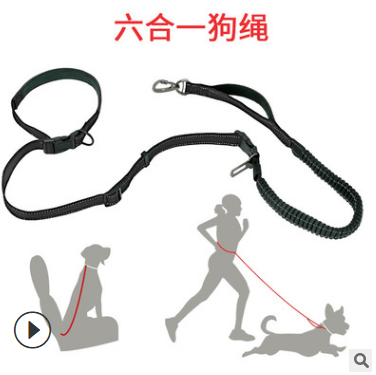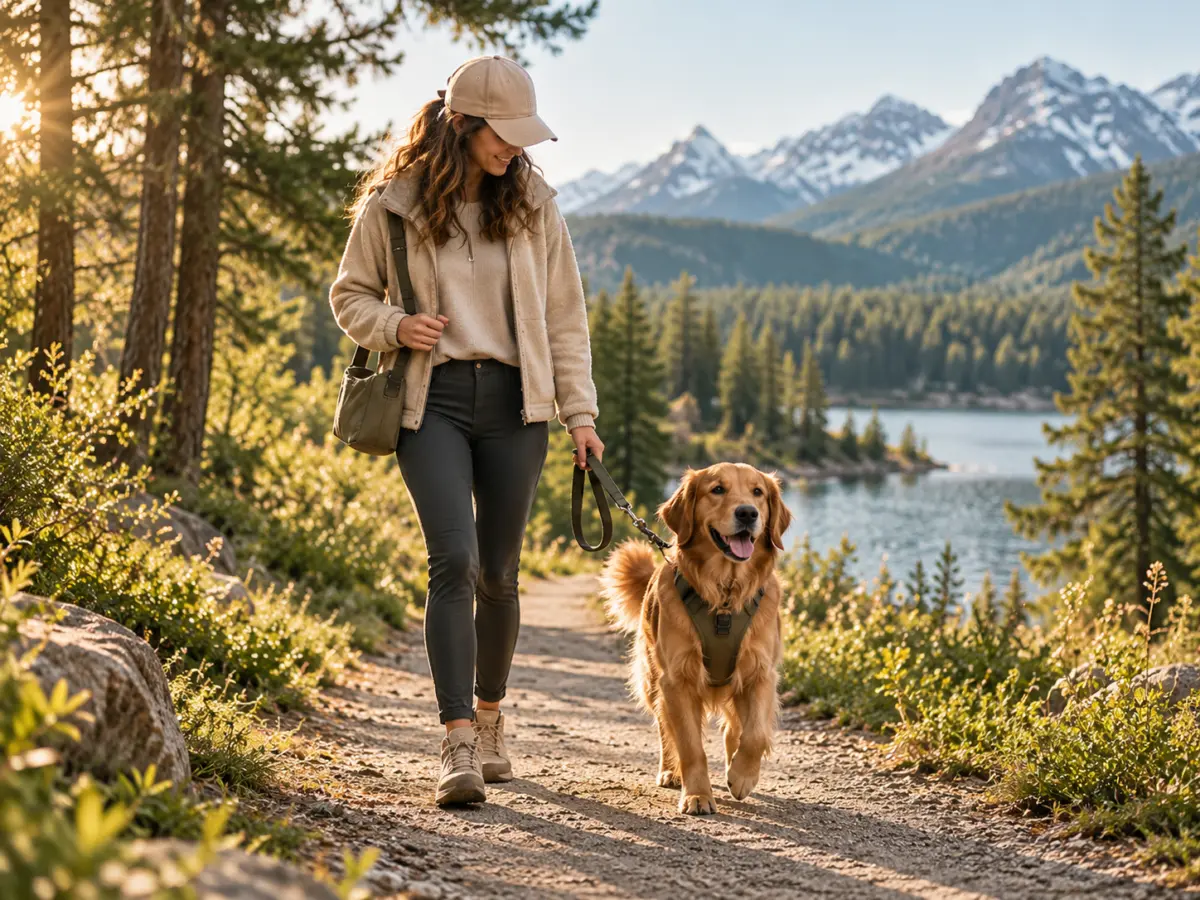

Search results for a hands-free dog leash with car seat buckle mix two jobs that look similar in product photos and feel very different in real life: walking with your hands free, and keeping a dog from roaming the cabin while you drive. This guide separates those jobs, shows a practical car-day setup, and explains where walking hardware stops being a crash restraint.
If you already use a waist leash on runs or neighborhood loops, you can keep that habit for the walk portion of the day and switch to a dedicated seat-belt tether once the dog is in the vehicle. Soft claims only—fit, practice, and local rules matter more than any single product name. For a broader overview of hands-free walking, see whether a hands-free leash is right for you and our longer car travel seat-cover and seat-belt guide.
Two jobs, one shopping phrase
Retail titles often bundle a waist belt, a bungee section, and a plastic buckle that looks like it belongs on a vehicle seat belt. That bundling is convenient for packing, but it invites a dangerous shortcut: clipping the same walking leash into the car’s seat-belt receiver and assuming it behaves like a crash-tested pet restraint.
Treat the phrase as two intents:
- Hands-free walking — waist or crossbody connection so your hands stay free on calm paths, runs, or stroller days.
- In-car restraint transition — a short tether that limits roaming while the vehicle moves, preferably designed as a seat-belt tether rather than a long walking lead.
You can own gear that covers both days of the week. You should not pretend a long leash with a buckle insert is a substitute for vehicle safety engineering. For human seat-belt fundamentals (why short, locked webbing matters in a sudden stop), the IIHS seat belt research overview is a useful non-pet reference. For pet travel habits and packing mindset, see the ASPCA travel safety tips and the AKC travel advice hub.
What “car seat buckle” usually means on a leash listing
On many walking products, the buckle is a male tongue that inserts into the vehicle’s seat-belt buckle. It lets you park a short tether without hunting for a latch plate on the leash itself. That can be handy for:
- Quick stops when you need the dog on a short line in the back seat
- Pairing with a harness (never a flat collar alone for vehicle motion)
- Keeping the dog from diving into the driver’s lap on familiar routes
It does not automatically mean crash certification, energy-absorbing design, or a guarantee of injury prevention. If a listing never mentions harness attachment points, maximum pet weight, or that the buckle is only for limiting movement, read that silence as a cue to stay conservative.
A calm setup map: walk → car → walk again
Here is a sequence that keeps jobs separate without turning every errand into a gear swap circus.
1) Before you leave the house
- Fit a well-adjusted harness. For car days, prefer a harness with a solid back (or dual) ring you trust under a short pull—not a flimsy decorative D-ring.
- Stage a dedicated short seat-belt tether in the vehicle (door pocket or seat-back organizer), separate from your long walking leash.
- If you use a waist leash for the walk to the car, practice clipping and unclipping once in the living room so the driveway is not your first rehearsal.
2) Hands-free portion (optional)
On calm sidewalks or park loops, a hands-free running waist leash or a dual hands-free waist leash keeps your hands free for a coffee, phone map, or stroller. Keep traffic length short near parking lots. If your dog lunges hard, hands-free is a privilege earned with training—not a default for every dog.
3) Transition at the vehicle
- Shorten or hand-hold the leash before opening the door.
- Invite the dog in; do not let them leap across seats while you still hold a long lead that can snag.
- Clip the short car tether to the harness ring, then seat the buckle into the vehicle receiver (or use the vehicle’s own latch as your product instructs).
- Stow the waist leash so it cannot wrap ankles or pedals.
PawFurvia’s nylon pet seat belt and adjustable dog seat belt are built as short vehicle tethers—use those (or similar dedicated tethers) for the drive, not a full walking length.
4) During the drive
- Aim for enough length for a sit/down, not a full roam into the front seat.
- Windows: cracked for airflow is fine; heads fully out at highway speed is a bad trade.
- Never leave a dog alone in a hot or cold cabin—travel tips from the ASPCA page linked above are worth a fresh read before summer road trips.
5) Arrival
- Attach the walking leash to the harness before releasing the car tether when you are in busy lots.
- Exit on the curb side when you can.
- Rebuild hands-free only after you clear cars and bikes.
Honest limits: what a buckle insert is not
Be blunt with yourself:
- Not a child seat. Pet tethers are not regulated like human child restraints. Do not borrow human crash-test confidence from a plastic tongue that happens to fit the buckle.
- Not collar-safe for motion. Sudden stops load the neck. Harness first.
- Not a substitute for crate training when your dog panics, chews webbing, or needs a known den for longer highway days.
- Not hands-free driving. Your attention stays on the road; the tether’s job is limiting chaos, not entertaining the dog.
If a multi-function leash includes a seat-belt style buckle as one of many configurations, treat that as a convenience clip for short restraint—not as proof the entire walking leash is a vehicle safety system. Our multi-function leash setups guide maps walking configurations; keep car use on the short end of the diagram.
Fit and hardware checklist
| Check | Why it matters | Quick test |
|---|---|---|
| Harness ring quality | Car loads concentrate on one ring | Wiggle the ring; look for solid stitching, not a decorative loop |
| Tether length | Too long = front-seat visits | Dog can sit/lie, cannot plant paws on console |
| Buckle seating | Partial clicks eject | Listen/feel a full latch; tug once before shifting into drive |
| Chew history | Webbing fails quietly | Inspect before each trip; retire frayed gear |
| Waist belt comfort | Hands-free only works if you wear it | Walk 10 minutes at home; adjust padding and clip side |
Training notes that beat more hardware
Gear fails less often when the dog already understands a few cues:
- Wait at open doors (car and house).
- Settle on a mat or seat cover for a minute with the engine off, then with it on.
- Place in the same seat every time so the tether length stays consistent.
Short, boring practice in the driveway beats a first lesson on the interstate. If your dog is airsick, anxious, or a chewer, talk with your veterinarian about trip planning—hardware alone will not fix physiology.
When to prefer a crate or carrier instead
A short seat-belt tether is a compromise for dogs who ride calmly and need limited roam. Prefer a well-secured carrier or crash-aware crate setup when:
- The dog cannot settle on a seat even with a short line
- You share the cabin with kids who need clear space
- Trips are long enough that chewing or pacing is likely
- Local rules or your insurer’s guidance favor containment
Containment and tethering are tools, not moral categories. Pick the one that matches this dog, this car, and this day’s length.
Product roles on a PawFurvia car day
Use this as a role map, not a hard sell:
- Walk / jog: hands-free waist leash or classic hands-free running leash
- Two-dog waist days: dual hands-free waist leash
- In-car short tether: nylon pet seat belt or adjustable dog seat belt
Sizes, hardware, and photos live on each product page—measure the dog and read the current listing before you order. We do not invent crash ratings here.
FAQ
Can I leave the waist leash on and just buckle the end into the car?
Only if the remaining length is truly short and the leash is rated/intended for that use. Most waist systems are built for walking stretch and clip geometry, not cabin restraint. Safer pattern: dedicated short tether for the drive.
Is a seat-belt buckle on a walking leash “airline approved” or “crash tested”?
Those phrases mean different things—and many listings use them loosely. Ask for the actual standard or lab reference. If none exists, treat the buckle as a convenience connector.
Harness or collar in the car?
Harness. Collars concentrate force on the neck in a sudden stop.
Do I need hands-free at all if I mostly drive?
No. Many households only need a solid short leash for parking lots plus a car tether. Hands-free is optional for the walking segment of the day.
Parking-lot edge cases people forget
Most near-misses happen in the ten meters between the seat and the store door—not on the highway. Build a boring ritual:
- Clip walking leash first when the lot is busy; only then unbuckle the car tether.
- One door at a time. Opening both rear doors invites a dart-through corridor.
- Treat the cart corral as a training ground for a short “heel to the door” before you rebuild hands-free.
- Rain days: wet paws + leather seats = sliding. A seat cover from your car kit helps the tether length stay predictable because the dog is not skating forward.
If you routinely carry bags, a waist leash on the walk to the car can free a hand—then retire it for the drive. That is the entire point of separating the two jobs in the shopping phrase.
Choosing between waist, dual-waist, and a classic hands-free belt
Hands-free walking hardware is not one silhouette:
- Single waist leash — simplest for one dog on predictable routes.
- Dual waist — two attachment points or two leads from one belt; only useful if both dogs already walk politely. Two strong pullers on one belt is a physics problem, not a product upgrade.
- Classic running belt styles — often more padding and a centered attachment for jogging; still not a car system.
Match the belt to the walking day you actually have. Then keep the car tether in the vehicle so you are not tempted to “just use the buckle end” of a long lead because it was already in your hand.
A one-page packing list for errand + trail combos
- Fitted harness (backup harness in the trunk if you travel far)
- Short car tether with seat-belt tongue already tested in your vehicle’s buckle
- Walking leash or waist system coiled in a door pocket
- Water bowl / bottle for the dog; waste bags
- Seat cover if fur or dampness is part of the plan
- ID tags current; microchip info reachable on your phone
None of this requires scarcity language or fake “best seller” claims. It requires repetition until the swap is muscle memory. When friends ask how you keep the dog out of your lap on the freeway, the honest answer is usually “short tether + harness + practice,” not a miraculous walking leash photo.
Bottom line
A hands-free dog leash with car seat buckle search is really two checklists. Keep walking hands-free gear for paths where you have earned that privilege. Keep a short, harness-attached seat-belt tether for the cabin. Practice the swap in a quiet driveway. Read authority travel guidance before long trips. And skip any claim that a plastic tongue alone turns a walking leash into a crash system.
Next reads: how to run with a waist leash, car travel seat-cover and seat-belt guide, and multi-function leash setups.