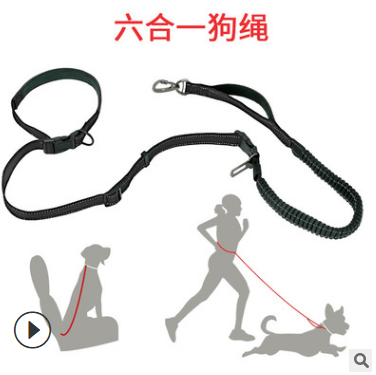
On trail forums, the leash debate shows up like clockwork: someone wants a long line so their dog can scramble and sniff; someone else cites a six-foot rule, a national park leash requirement, or a near-miss with a bike. Both instincts are real. The useful question is not “what leash looks most outdoorsy?” — it is what length keeps wildlife calmer, matches posted rules, and still lets you hike without a constant wrestling match.
This guide covers legal vs practical length, when hands-free helps, how to pass hikers and bikes, water and heat on trail, wildlife recall honesty, and a short pack list. Soft CTAs to leash and harness types you might already use. No invented park policies — always check the land manager for the place you are standing.
Legal vs practical leash length
Legal / posted rules come first. Many US municipal trails, state parks, and most national park units that allow dogs require a leash — often six feet (about 1.8 m) or shorter — and ban off-leash even when your dog has “perfect recall at home.” Some wilderness areas differ; some city greenways are stricter. Regulations change. Read the trailhead sign and the park site the morning you go.
Practical length is how much line you can manage without clothesline-ing other hikers:
- Short traffic / bottleneck length (roughly under 4 ft usable): bridges, steeper switchbacks, crowded viewpoints, parking lots.
- Standard on-trail control (often around 6 ft): matches many posted maximums and keeps the dog in your decision radius.
- Longer training lines: useful in legal open areas for recall practice — not a loophole on leash-required trails.
A multi-way or adjustable leash earns its keep when you can shorten for a pass and lengthen slightly for a sniff break without swapping gear. For city-adjacent shared paths, our notes on space, leash length, and passing apply on many packed weekend trails too. For general length thinking off-trail, see how long a dog leash should be.
Retractable cords on technical trail: usually a poor match — thin lines cut, locks fail at the wrong moment, and the handle is awkward on scramble sections. Prefer a solid leash you understand under load.
When hands-free helps (and when it does not)
A waist or hands-free leash can free your hands for poles, water, or a quick map check on steady dirt grades with a dog who already shares pace well.
It is a weaker fit when:
- Your dog still lunges at wildlife or other dogs.
- The trail is steep, rooty, or crowded — you need the leash in hand to shorten instantly.
- You are teaching loose-leash skills; waist attachments can turn your hips into the tug toy.
If you try hands-free, use a setup with a quick way to take the leash back into hand, and read a dedicated fit/safety overview like our hands-free leash guide. Soft product option: a hands-free running waist leash for dogs who already hike politely — not as a substitute for training.
Passing hikers, horses, and bikes without drama
Trail etiquette is half the sport when you have a dog.
- Spot the pass early. Shorten the leash before you are shoulder-to-shoulder.
- Step to the side on stable ground — not onto cryptobiotic soil, fragile plants, or the outer edge of a cliffy tread.
- Put your body between your dog and the passer if your dog is friendly-but-rude or unsure.
- Yield wisely. Common patterns: downhill traffic yields to uphill in some hiking cultures; everyone yields to horses; bikes may need a clear lane — follow local custom and verbal cues (“passing on your left”).
- Skip the retractable surprise. A sudden long spool across the trail is how trips and angry conversations start.
- Ask before sniff greetings. Not every dog or human wants contact.
If your dog cannot pass calmly yet, choose quieter weekdays or less popular trailheads until skills improve. Gear will not invent manners.
Water, heat, and honest distance
Hiking with dogs fails most often from heat and overambition, not from picking the wrong carabiner color.
- Carry more water than you think for both of you; filter or pack-out plans vary by region — do not assume every creek is safe or legal to use however you like.
- Watch dark dog + dark rock + midday sun. Start earlier than your Instagram friends.
- Pads and trail surface: granite and shale heat up; test with the same caution you use on city pavement in summer.
- Distance: build up. A dog that jogs neighborhood miles may still be sore after their first rocky descent. Shorter out-and-backs beat heroic loops with a limping partner at mile six.
- Harness comfort matters on long days. A rubbing chest strap becomes the whole trip. Fit notes and hiking-oriented selection live in our hiking harness guide.
Wildlife, recall, and staying on the trail
Even friendly dogs stress wildlife. Chasing is not “enrichment” when it ends in a ticket, a kick from an ungulate, or a lost dog in drainage brush.
Field rules that travel well
- Leash where required — and consider leashing anyway in high wildlife seasons even if local rules are looser, especially if recall is not stadium-solid.
- Keep the dog on durable tread; do not let them cut switchbacks or blast through nesting cover.
- Practice a rock-solid “leave it” / emergency recall before you need it near a squirrel circus.
- Food and trash: pack it like you mean leave-no-trace. Dogs find wrappers; wildlife finds dog food.
If your dog’s recall is “pretty good at the park,” treat trail wildlife as a different sport. Long lines belong only where legal and safe; they are not invisible.
Pack list (dog + human, light edition)
On the dog / in hand
- Fitted hiking or walking harness (handle helpful at bridges and for brief close control — not for casually hauling a large dog up rock)
- Leash you can shorten (fixed 6 ft, multi-way, or rope leash used within legal limits)
- ID tags; consider a GPS tag if you use one — still not a substitute for the leash where required
In your pack / waist pack
- Water + collapsible bowl
- Waste bags (yes, on backcountry trails — pack out per local rules)
- Tiny first-aid (paw tape, tweezers, your own blister care)
- Light towel for muddy returns to the car
- Treats for reinforcing calm passes
Soft kit links if you are building from our shelf: a multi-way round rope leash for handlers who want length options they can manage, a 6-in-1 multi-function leash for shorter urban-trail hybrids, and a tactical walking harness with handle for close control moments — measure chest and neck, and confirm the day’s leash laws before you leave the lot.
Further reading
A calm product note
Pick length for rules + control, not for the longest Amazon bullet list.
- Need hand-held versatility on mixed trails? Start with a multi-function or multi-way leash you can shorten fast.
- Steady jogger on wide dirt roads with a polite dog? Hands-free can be on the table.
- Steep or crowded days? Leash in hand, harness that fits, ego in the pack.
We would rather you finish the hike with pads intact and wildlife undisturbed than win a gear aesthetic contest at the trailhead.
FAQ
What leash length is best for hiking with dogs?
On many leash-required trails, a six-foot leash is the practical maximum that matches common rules. Shorter is better for crowds, bridges, and wildlife encounters. Longer lines only where legal and where you can still prevent tangles and chasing. Always follow posted regulations for that trail.
Are 6-foot leashes required on all US trails?
No. Rules vary by city, county, state park, national park unit, and private land. Many popular parks do require dogs on leash at six feet or less; some areas ban dogs entirely. Check the land manager’s site and the trailhead sign for your hike — do not rely on a blog (including this one) as the final authority.
Is a hands-free waist leash good for hiking?
It can be, on moderate terrain with a dog who already paces well and does not lunge. It is a poor primary choice for steep, crowded, or wildlife-heavy trails until you can take the lead back into hand instantly. Train and test on easy days first.
Can I hike with a retractable leash?
We generally advise against retractable cord leashes on technical or crowded trails: control is weaker, cords can injure, and sudden length is rude in a pass. A solid fixed or multi-way leash is easier to manage under real trail loads.
How do I keep my dog from bothering wildlife?
Leash when required (and often when not, if recall is imperfect), practice “leave it,” keep distance from nesting or grazing animals, and choose trails that match your dog’s current skills. Excitement is not a free pass to chase.
What harness works for hiking?
One that fits without rubbing, allows shoulder movement, and preferably offers a secure clip point you trust. A top handle helps for brief close control. See our hiking harness guide and measure before buying — breed stereotypes are not a size chart.
Designed for Pets. Made for the Journey. — PawFurvia field notes for quieter passes, legal leashes, and trails you can share.