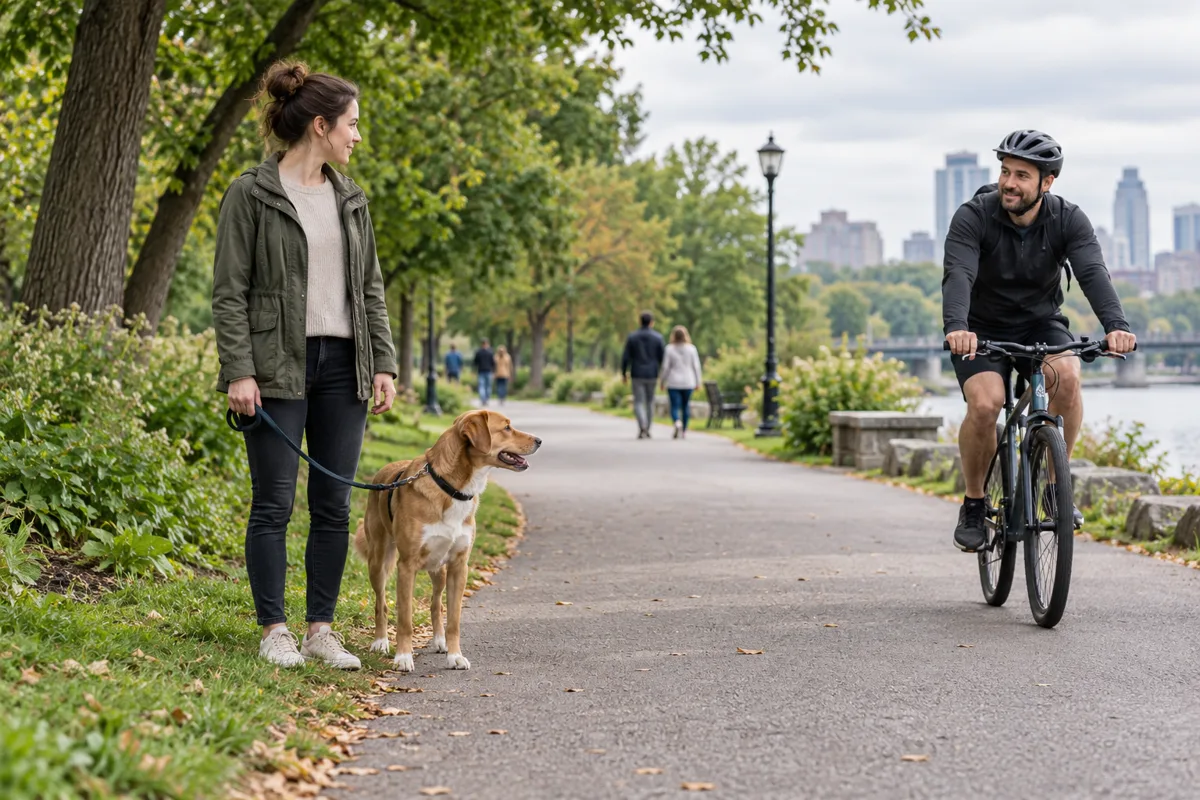
A shared path asks you to manage space, not just the lead. Bikes, runners, children, other dogs and people using mobility aids may approach at different speeds. Before you step onto a busy route, decide where your dog will walk, how you will make room for someone passing, and when to choose another path.
Read the path before you join it
Look for signs and painted divisions. Some routes separate walking from cycling; others let everyone use the same space. Check whether the path has blind bends, narrow bridges, crowded entrances or a safe place to pause. Follow the rules posted locally. If your dog is worried by fast-moving traffic, a quieter route may be a better first choice than asking them to endure a difficult path.
Active Travel England describes shared-use routes as paths used by both pedestrians and cyclists and notes that mixing heavy numbers of both can create conflict. That is UK planning guidance, not a rule for every country; the practical lesson is to expect different speeds and plan for enough room.
Keep the lead short enough to avoid a line across the path
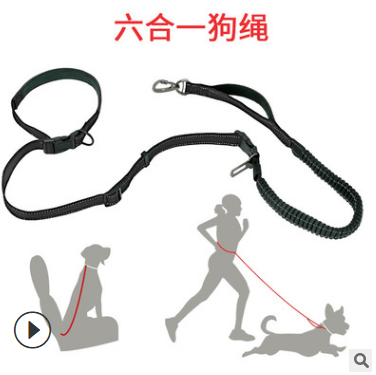
Use a manageable lead length when other people are near. A long or extendable line stretched across the route can be hard for an approaching cyclist to see and gives you less time to respond. Avoid wrapping the lead tightly around your hand. Keep your dog close enough that you can step aside together, without pulling them into an uncomfortable position.
In the UK, Blue Cross explains that the Highway Code calls for a short lead on paths shared with cyclists or horse riders. Check your own area's posted rules if you walk elsewhere. Our leash-selection guide can help you compare handling options, but no leash replaces attention to the path.
A five-step passing routine
- Look ahead and behind. On a curved path, listen as well as look, while remembering that not every bike has an audible bell.
- Choose a side early. Stay on the designated pedestrian side where one exists. On an unmarked route, take a predictable line and follow local etiquette.
- Bring the dog near you. Shorten the lead before the pass, keeping it loose enough for comfortable movement.
- Pause where there is space. Step into a safe wider section if needed; do not stop suddenly in the center or step into traffic.
- Resume after the whole group passes. Check for a second rider or runner before giving your dog more room to sniff.
If another dog approaches, do not assume the dogs need to greet. Blue Cross's lead-walking advice recommends giving dogs space rather than forcing a close on-lead meeting.
What to do when the path is too narrow
A narrow bridge, blind corner or crowded market entrance may leave no comfortable passing room. Turn around, wait at a wider point, or take a parallel street. This is route planning, not a failure. Our busy-pavement guide offers a similar decision framework for city streets, while the new-neighborhood checklist helps you scout alternatives before the next walk.
Illustrative example: a bend beside the park
This is a fictional planning example, not a real PawFurvia customer account or product test. A person and dog reach a blind bend on a shared path. Rather than letting the dog explore the full lead length, the person moves to a wider section before the bend, waits for two cyclists to pass, then continues. On the next outing, they choose the quieter parallel path for the dog's longer sniffing time.
Before the next shared-path walk
Check the harness or collar fit, clip and lead condition. Make sure you can hold the lead securely while keeping your hands free of a phone. Save a mental note of the path's tight points and its quiet exits. Give your dog exploration time where there is room, as in our sniff-walk route plan; bring them closer before you rejoin a busy section. The best shared-path routine is predictable for everyone using it.