New streets can turn a familiar walk into a guessing game. Before taking your dog around a neighborhood you do not know, choose a short loop with a safe crossing, enough pavement space, and an easy way home. This checklist helps you make those decisions before you are holding a lead beside a busy road.
Start with a short loop, not the longest route
Look at a map before leaving. Mark the start point, one quiet stretch, a crossing, and a return route. A 10–15 minute scouting loop is enough to learn where pavements narrow, where traffic turns, and where your dog can pause without blocking others. Treat the time as a planning example, not an exercise target; your dog's age, health and comfort decide the distance.
PDSA advises checking unfamiliar routes in advance, avoiding roads without pavements where possible, and using marked crossings. Its road-safety guidance for dog owners is a useful starting point. Local crossing rules and leash requirements still take priority.
Check five things before you leave
- Crossings: Identify a marked crossing at each road you must cross. Do not assume a map shows construction or temporary closures.
- Pavement width: Note pinch points such as outdoor seating, bins, school gates and bike parking. Decide where you can step aside.
- Traffic and bikes: Look for driveways, turning vehicles and shared paths. Leave room to shorten the lead without wrapping it around your hand.
- A quiet exit: Choose a side street or direct route home if the area feels too busy for your dog.
- Weather and light: Check temperature, rain and visibility; a pleasant route in daylight may be harder at dusk.
Fit and identification before the first step
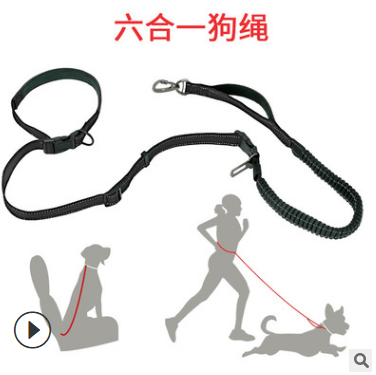
Check the harness or collar fit, close every buckle, inspect the lead clip and confirm your dog's ID information is current. For a new area, keep the lead at a length you can manage around roads and other people. Blue Cross's road-safety code recommends keeping dogs on a lead by roads and reserving extendable leads for open spaces. If you are comparing walking gear, use our everyday leash guide; the exact product's fit and measurements matter more than a generic size label.
Walk the route in three small stages
Stage 1: observe. Begin on the quietest section. Give your dog time to notice the new smells while you watch traffic, entrances and other walkers. Our sniff-walk guide explains how to make room for exploration without losing control of the route.
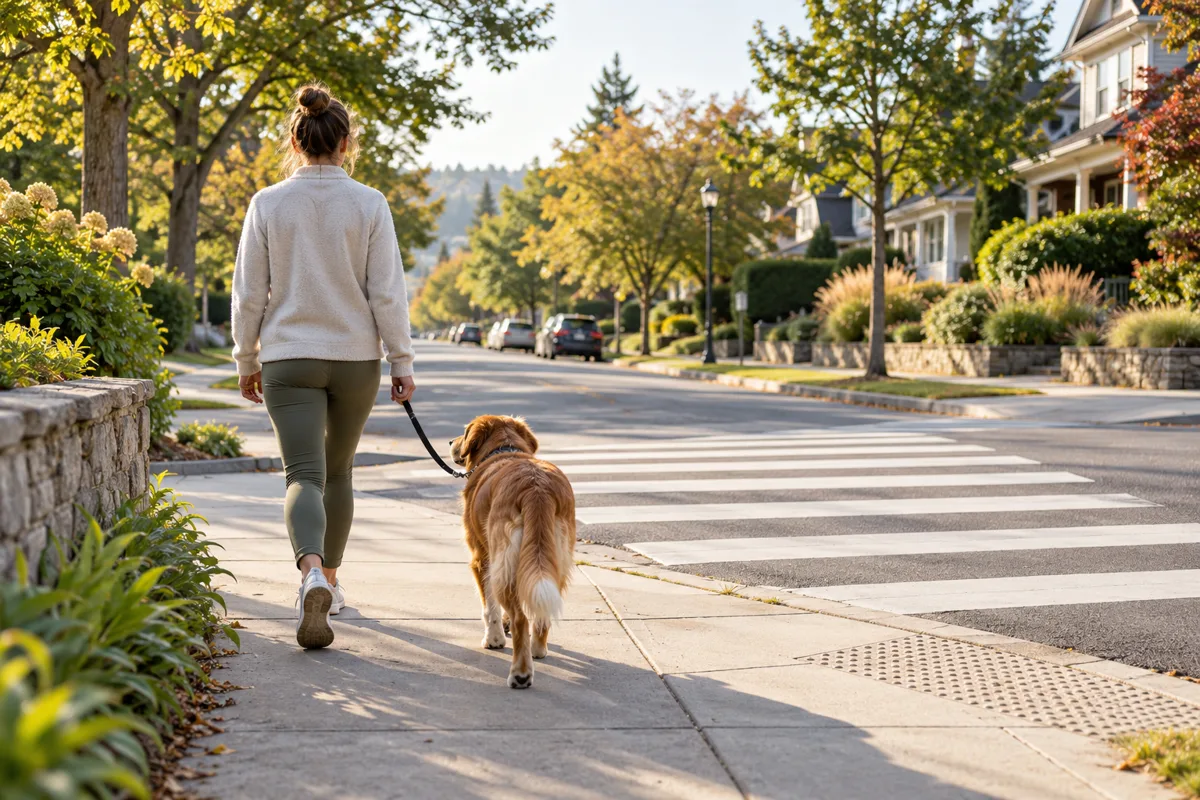
Stage 2: cross deliberately. Approach a marked crossing with the lead shortened to a comfortable, manageable length. Pause before the kerb, check both directions and cross without stopping in the roadway. Follow local road rules and avoid distractions from your phone.
Stage 3: review. On the way back, note where your dog seemed comfortable, where you had to squeeze past others and where a different time of day might help. Keep the parts that worked; there is no need to force the full loop on the first visit.
Illustrative planning example
This is a fictional scenario to show how the checklist works, not a PawFurvia customer story or product test. A person visiting a new apartment block finds that the direct route to a park crosses a wide junction. They choose a shorter residential loop instead, use a marked crossing one block away, and leave the park for a later walk. The dog has time to sniff along a quieter pavement, and the person learns which corner becomes crowded after school.
Save a route note for next time
Record the nearest safe crossing, a quiet turnaround point, any narrow sections and the time you walked. If someone else will walk your dog, add these notes to a dog-walker handover sheet. For narrow city pavements, see our busy-pavement route guide. A good first route is one you can shorten without stress.