You type escape proof dog harness into a search bar after a bad afternoon: the leash goes slack, the harness hangs empty in your hand, and your dog is already three houses down chasing a squirrel. Forum threads fill with brand names and absolute promises. The useful answer is less glamorous. Dogs back out of gear for specific mechanical reasons — loose neck openings, twisted straps, wrong size, panic backing — and hardware can only reduce risk. No harness is escape-proof. Anyone selling you certainty is selling marketing.
This guide covers why dogs slip harnesses, what multi-point / Y-front designs actually change, a pre-walk strap checklist, how to measure instead of guessing, backup ID habits, and when to get a trainer involved. Soft product notes at the end. No fabricated “tested on 200 escape artists” claims.
What people mean when they search “escape proof”
They usually mean one of three dogs:
- The backup artist — freezes, then reverse-out of the neck hole when startled.
- The Houdini wiggle — rolls, paws, and works a loose belly strap until the harness rotates and slips.
- The panic puller — lunges so hard a poorly fitted vest rides up and becomes a sweater they can shed.
What they want from gear: a snugger neck architecture, a second belly strap or chest panel that does not leave a huge exit ramp, buckles that stay closed, and a fit that does not twist after three steps. What they cannot buy: a guarantee against fear, prey drive, or a harness left two sizes too big “for growth.”
Why dogs back out (mechanics, not morals)
Neck opening too large. If you can pull the harness forward over the ears with little resistance when the dog reverses, the exit exists. “Roomy for comfort” on the neck is often the escape path.
Chest strap too low or too high. A strap that sits on the soft abdomen is miserable and invites pawing. A strap that rides into the throat makes the dog fight the gear. Either way, fidgeting creates slack.
Single belly strap on a deep-chested or narrow-headed mix. Some shapes need more coverage or a second strap so the harness cannot rotate into a step-out position.
Twisted after play. A harness that looked fine at the door can spin during a zoomie. One twisted strap equals uneven tension and a new gap.
Clip-on mistakes. Clipping only to a loose collar ring while a vest hangs half-fastened is not a harness walk. Finish every buckle.
Fear or pain. A dog who suddenly slips gear after fireworks, a vet visit, or a sore shoulder is not “being naughty.” Rule out medical issues with a vet when behavior changes overnight.
Fit that closes the exit ramp
Start with measuring — not with the size your neighbor’s dog wears. Use our how to measure your dog for a harness and collar walkthrough, and cross-check breed-ish ranges on the size chart by weight and breed only as a hint. For a second opinion on fit basics, AKC’s harness-selection guide and their well-fitting harness notes cover the same “snug, not tourniquet” idea. Between sizes, ask; do not automatically size up for “comfort” if your dog is an escape risk.
Field fit checks
- Two fingers under major straps as a starting point — snug, not tourniquet, not floppy.
- Neck first. With the harness on and buckled, gently try the reverse-out motion yourself in a secure yard or indoors. If it slides toward the ears easily, tighten or change size/model.
- No twist after a short walk. Stop after ten steps and look at every strap.
- Shoulder clearance. Front legs should swing without a horizontal band chiseling the shoulder on every stride. Y-shaped fronts often help here compared with a straight strap across the chest — see front clip vs back clip for clip choice while you train.
- Handle as a momentary tool. A top handle helps you keep a dog close at a curb when something scary appears — it is not for casually lifting large dogs. Our harness with handle guide covers when that feature earns its keep.
For medium and larger dogs who need adjustability and a handle for busy streets, a tactical-style no-pull walking harness with multiple adjustment points is the kind of platform people reach for after a slip — still with honest fit work, not magic labeling.
Pre-walk strap checklist (60 seconds)
Do this every time, not only after a scare.
- Lay the harness out flat. Untwist straps before the dog steps in or the head goes through.
- Buckle every intended buckle. Listen/feel for a full click.
- Adjust neck and chest so fingers fit but the fabric cannot rotate freely around the ribcage.
- Clip the leash to the ring you mean to use (front for redirect training, back for steady trail tow — match the day’s job).
- Walk three steps. Stop. Recheck. Fix twists now, not two blocks later.
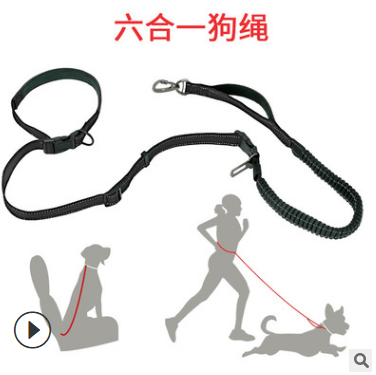
- If your dog is a known backup risk, keep a short frog-clip control leash option for doorways and parking lots where surprises happen at close range.
Training pairs with hardware
Gear lowers the odds; training changes the pattern.
- Reward walking near you before the dog hits the end of the leash and panics.
- Practice “put on harness = good things” in the house so dressing is not a wrestling match that leaves straps half-done — AKC’s how-to-put-on steps are a calm checklist if you want an outside walkthrough.
- Desensitize scary triggers with a professional force-free trainer if fireworks, bikes, or other dogs cause explosive reverse-outs.
- Recall and emergency U-turn on a long line in a secure area — not as a substitute for a leash in public.
A no-pull style front clip can help with forging, but it will not fix fear escapes. Our notes on what no-pull harnesses actually do stay relevant here: tool plus teaching.
Backup layers (because gear fails)
Assume the harness can fail. Build boring redundancy.
- ID tags on a flat collar worn with the harness if your dog tolerates both. Microchip registered and up to date — the same redundancy ASPCA travel safety guidance stresses when pets are in unfamiliar places.
- Phone number on the tag that actually rings.
- Secure yards and double-gate habits for known escape artists — do not rely on one latch.
- Photo on your phone updated with current weight and markings for “lost dog” posts.
- Never leave a nervous dog tied unattended outside a cafe; tied dogs who panic can slip gear or injure themselves.
If a collar-only backup worries you for tracheal reasons, talk with your vet about a lightweight ID collar vs harness-only ID sleeves — different dogs need different compromises.
Mistakes that recreate the empty-harness moment
- Buying XL “to grow into” for a slim escape-prone adolescent
- Skipping the post-zoomie recheck
- Using a fashion vest with one adjuster on a barrel-chested mix
- Clipping a retractable cord to a half-fitted harness (thin cord + panic = bad math)
- Calling any product escape-proof on social media and then skipping measurement
Body shapes that fool “standard” sizes
Escape stories cluster around a few shapes:
Narrow heads, wide chests. Sight-hound mixes and some whippets-of-the-mutt-world can reverse through a neck hole that still looks snug on a Lab-shaped chart. Prioritize neck adjustability and a design that does not rely on a tiny head to keep the harness on.
Deep, barrel chests. Bulky front assemblies need enough strap length without leaving a hammock of slack behind the elbows. Slack becomes a paw hook; a paw hook becomes a twisted mess; a twisted mess becomes an exit.
Long-backed, short-legged dogs. Dachshund-type proportions shift where a chest strap wants to sit. A strap that works on a square Corgi torso may slide on a long back. Recheck after the dog trots, not only when standing for the mirror selfie.
Adolescents in a growth spurt. The harness that fit in March can become a shrug-off jacket in June. Remeasure monthly during growth. Do not “size up for next month” if this month’s dog already slips.
Heavy coats. Undercoat blow can make a harness feel tighter in the store and looser after a brush-out. Fit on the coat you will actually walk in, then recheck after grooming.
If your dog sits between chart rows, treat that as a conversation with the brand — not a coin flip toward the larger size when escape history exists.
A secure-yard reverse-out drill (without scaring your dog)
You need information, not a trauma rehearsal.
- Choose a fenced yard or closed room.
- Put on the harness as you would for a real walk. Attach a leash and hold it.
- Kneel beside the dog. Gently guide the dog backward while watching the neckline. You are testing whether the opening climbs toward the ears with light reverse pressure — not yanking the dog out.
- If the harness begins to peel over the occiput (back of the skull) too easily, tighten the neck adjusters or change size/model.
- Stop if the dog panics. Switch to treat-based cooperation and try another day.
- Repeat after a short play session when straps may have migrated.
This is a diagnostic, not a party trick. Do it occasionally after you change sizes, not fifty times in a row.
Doorways, elevators, and other high-slip zones
Most empty-harness stories do not happen mid-block on a boring sidewalk. They happen at thresholds:
- Front door opens, delivery person appears, dog explodes backward
- Elevator doors start to close, leash shortens suddenly, dog reverses
- Parking lot, skateboard, dog spooks toward traffic
For those seconds, short leash + finished buckles + body blocking matter more than the brand embroidered on the chest. Stand so your legs and the door frame shrink the exit. Ask visitors to wait until the leash is on and the harness check is done. Teach “wait” at thresholds if you can — even a two-second pause helps.
A short control leash earns its keep here precisely because there is less rope for chaos to travel through.
After a slip: the first ten minutes
If the dog is loose:
- Soft body language. Running at a scared dog often extends the chase.
- Shake a treat bag or use a known happy cue if that works for your dog.
- If you must chase, try to angle toward a fenced dead-end rather than a road.
- Once caught, clip on, move to a quiet spot, full harness recheck before the next step.
- Inspect paws and pads; panicked dogs cut themselves.
- That evening, write down what triggered it and which strap looked wrong. Patterns beat vibes.
Then fix the system: fit, backup ID, training plan. Buying a new harness without measuring is how people collect a drawer of almost-right gear.
Multi-dog and daycare handoffs
Escape risk rises when someone else dresses your dog. Walkers and daycare staff work fast. Give them a one-page note: photos of correct fit, which buckles must click, “do not size up,” and your phone number. Our older dog-walker handover sheet idea still applies — fit instructions belong next to feeding notes.
If your dog is a known Houdini, say so in the first sentence, not the footnote.
What “tactical” features change for escape-prone dogs (honestly)
MOLLE panels, rigid handles, and beefy buckles do not equal escape-proof. They can mean:
- More adjustment points (useful)
- A handle for close control in a spook (useful)
- Heavier hardware that holds under a lunge (useful)
- Bulk that some small dogs hate (not useful for every dog)
Choose structure because your walks need it — city traffic, strong pulls, hiking scramble — not because the word “tactical” sounds harder to escape. Pair structure with measurement. Compare styles in tactical vs regular harness if you are deciding whether that silhouette fits your dog’s day.
Soft product note
If you are rebuilding confidence after a slip:
- Measure carefully with the measuring guide.
- Consider a multi-adjust tactical no-pull harness with handle for structured walks once fit is verified.
- Keep a short frog-clip leash for doorways, elevators, and parking-lot close control.
- Put ID on a backup collar. Practice dressing until every buckle is automatic.
We build gear for real walks — Designed for Pets. Made for the Journey. — and we will still tell you the uncomfortable sentence: no harness is escape-proof. Fit, habits, and training carry more weight than a product title.
FAQ
Is there such a thing as an escape proof dog harness?
No. Some designs and careful fits make backing out harder. None eliminate fear, prey drive, chewing out of straps, or human error. Treat “escape proof” as a search phrase for better security features — not a promise.
Why does my dog back out of the harness?
Usually a neck opening that is too generous, a harness that rotates, incomplete buckling, or a panic reverse when startled. Pain or fear can also drive sudden escapes. Check fit first, then context.
Should I size down if my dog slipped a harness?
Sometimes — if the current size is clearly loose. Do not crush the shoulders or restrict breathing. Remeasure chest and neck, then choose the size that passes a gentle reverse-out test in a secure space. Between sizes, ask for guidance rather than guessing.
Does a dual belly strap prevent all escapes?
It can reduce rotation and the big “step-out” gap on some body types. It is not a guarantee. Fit and buckling still matter.
Should escape-prone dogs wear a collar and a harness?
Many handlers use a harness for walking control plus a lightweight collar for ID tags. Make sure the two do not fight each other and that the collar cannot snag. Microchipping remains essential.
When should I call a trainer?
If slips are tied to reactivity, terror, or aggression — or if you feel unsafe on walks — work with a qualified force-free trainer or behavior professional. Equipment is support, not a behavior plan.