Quick answer: Call the café first, choose a quiet time and a table away from the main walkway, and make the first visit short. Bring water, waste bags and a familiar mat. If your dog cannot settle or seems uncomfortable, leave and try a lower-pressure outing another day.
1. Ask the café before you leave
A “dog-friendly” label does not tell you where dogs may sit, whether there is room beside a table, or whether the outdoor area is open that day. Call or message the venue. Ask whether dogs are welcome indoors or only outside, whether water is available, and which entrance is least crowded. Follow the venue's current policy and local rules. Do not assume that a policy in one city applies in another. In the UK, Blue Cross notes that the venue decides whether to welcome dogs in eating areas and that dogs should not enter food-preparation areas. Elsewhere, check the applicable local rules.
2. Make the first visit easy to leave
A short visit at a quiet hour tells you more than a long visit during a rush. Before ordering, walk past the entrance and look for space between tables, a route to the exit and a place where your dog will not sit in the path of staff or other guests. If the café is busy, take a walk instead. Our busy-pavement route guide explains how to plan space around narrow paths and doorways.
Consider your dog's normal tolerance for strangers, other dogs, noises and waiting. A café is optional enrichment, not a test your dog must pass. If your dog is new to settling near people, practise at home or in a quiet outdoor spot first.
3. Pack a small, predictable kit
| Item | Why it helps | Check before leaving |
|---|---|---|
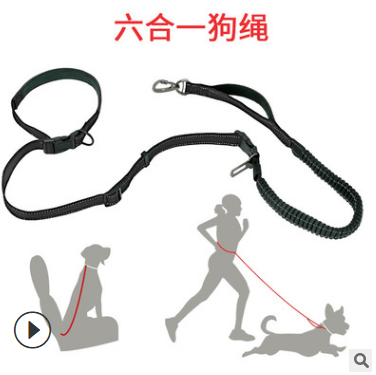
| Well-fitting harness or collar and fixed-length lead | Keeps your dog close beside you | Inspect straps, clip and fit; do not attach a lead to furniture |
| Water and a bowl | Lets you offer water without relying on the venue | Fill the bottle and check the bowl is clean |
| Familiar mat or towel | Defines a resting spot off the walkway | Choose one you can wash afterward |
| Waste bags and wipes | Helps you clean up promptly | Bring enough for the walk to and from the café |
| A few familiar treats, if suitable | Rewards calm moments without a new food experiment | Follow your dog's normal diet and any veterinary advice |
If you are uncertain about harness fit, use our measurement and fitting guide before buying or relying on new gear. Product photos and breed labels alone cannot confirm a safe fit.
4. Settle at the edge, then order
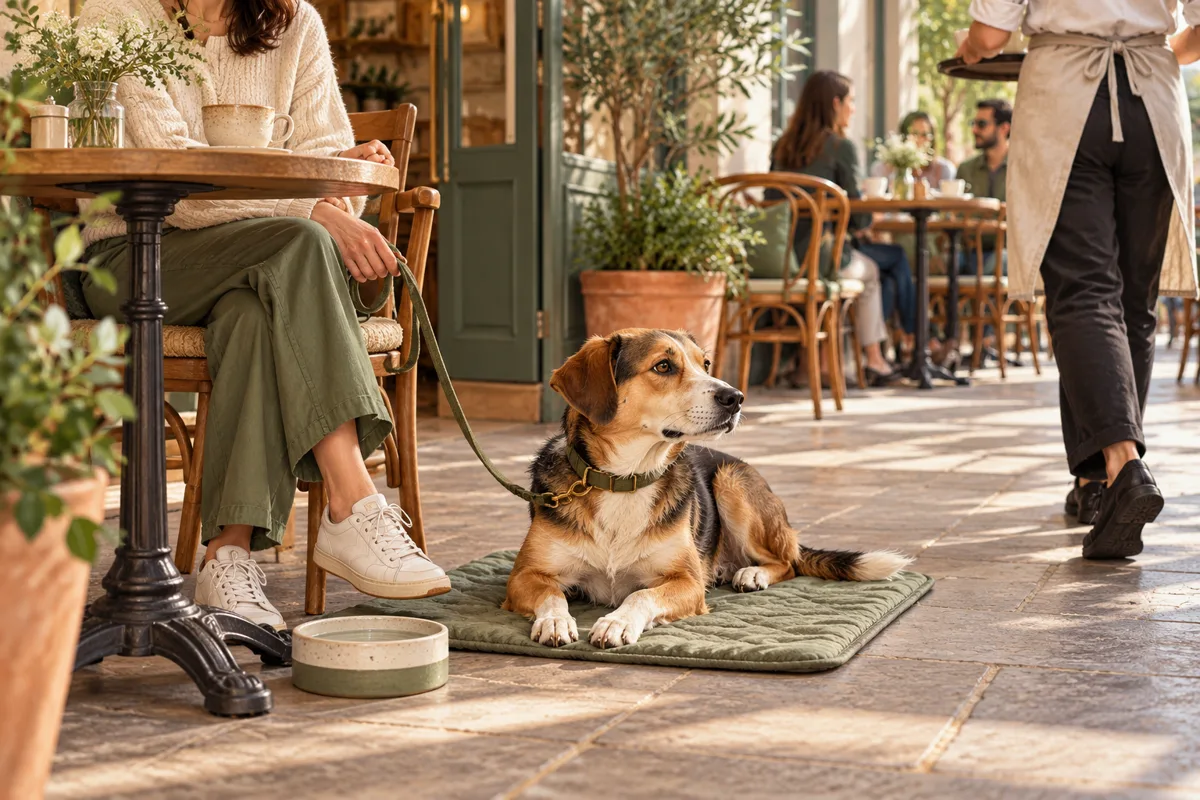
Choose a place where the dog can rest next to you without stretching a lead across a path. Keep the lead in your hand or under your active control rather than tying it to a chair. Give the dog room to look around and offer water. Avoid inviting strangers or other dogs to greet them. Ask before sharing any café food; many human foods are unsuitable for dogs, and your own vet's advice takes priority.
Order something simple and be prepared to take it away. Do not wait for a problem before deciding how to exit. If a nearby guest or dog needs more space, calmly move or leave.
5. Watch the dog, not the clock
Look at the whole dog and compare with their usual behaviour. The RSPCA's body-language guide describes relaxed posture and natural ears as useful cues, while changes such as cowering, lip licking or trying to move away can signal discomfort. A wagging tail alone does not prove that a dog is comfortable. Repeated scanning, barking, pulling toward the door or inability to rest are good reasons to shorten the visit. If you are concerned about a marked or persistent behaviour change, ask a veterinarian or qualified behaviour professional.
Example scenario: the table beside the counter
This is a fictional planning example, not a PawFurvia customer story, review or product test. A walker arrives with a dog at a café that allows dogs. The only free table is beside the order queue. The dog keeps standing as people pass within arm's reach. Instead of asking the dog to tolerate a full meal there, the walker requests a takeaway drink, steps outside and tries again on a quieter day. The useful lesson is to judge the space the dog actually has, not the venue's “dog-friendly” label.
6. Keep a two-minute note for the next outing
Write down the time, table location, crowd level, how long your dog was comfortable and what made departure easy or difficult. One visit is not a verdict. Use the note to choose a calmer time, a different table or a non-café walk next time. For a simple outing that gives the dog more choice, see our sniff-walk route plan. If someone else will take your dog, share the useful observations in our walker handover sheet.
Sources and scope
This practical checklist is general information; venue policies, local rules and each dog's needs vary. It does not replace veterinary or behaviour advice.