Dog Adventure · City walking
Quick answer: On a crowded pavement, plan the passing space before your dog reaches it. Keep the lead manageable, let others pass without forcing a greeting, and save the exploratory part of the walk for a wider, calmer place.
A busy sidewalk is a shared corridor: commuters, strollers, cyclists and other dogs may all need the same few feet. The aim is not to make your dog march perfectly at your heel for the whole outing. It is to make each narrow section predictable for your dog and considerate for other people.
1. Choose a route with escape space
Look at the route as a series of narrow and wide segments. A row of parked cars, shop doors or outdoor tables can remove room just when you need it. Mark a quieter side street, a wide frontage or a place to turn back. A loop with two options is more useful than a rigid distance target.
Try the route at a quieter time first. Notice delivery zones, school pickup periods and construction barriers. If your dog is easily worried by other dogs, do not rely on squeezing past them. Blue Cross notes that dogs on lead may react differently and benefit from space when passing other dogs rather than being forced into a greeting.
On very warm days or if your dog has a condition affecting exercise, let veterinary advice and the dog's needs set the outing. A shorter, calmer walk can be more useful than completing a planned distance under strain.
2. Set up a lead you can manage in close quarters
Before leaving, check the clip, stitching and attachment point. Adjust the harness on the dog, not by eye from a product photo. If the fit is uncertain, use the harness and collar measuring guide and recheck the specific item's size chart.
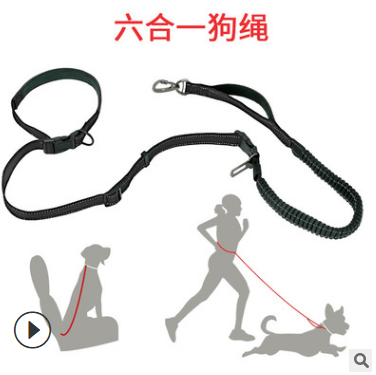
Choose a length that lets the dog move comfortably while keeping the lead from crossing a shop entrance or sweeping around a passerby's legs. A long or retractable lead may be appropriate elsewhere, but the shared pavement is a different setting. See the standard versus retractable leash comparison for the handling tradeoffs. Blue Cross's road-safety guidance recommends keeping dogs on lead beside roads and reserving extendable leads for open spaces.
Where the pavement becomes a signed shared path, cyclists add another passing pattern. Our shared-path checklist covers lead length, where to pause and when to choose a quieter alternative.
Hold the lead so you can shorten it before entering a narrow section, without winding it around a hand. Watch where the lead runs: across your path, under the dog's chest, or around street furniture. Stop and reset if it tangles.
3. Use a repeatable passing routine
- Look ahead: Spot the person, dog or bike early enough to choose space.
- Move aside: Step into a safe wide area or change sides if crossing is appropriate and permitted.
- Ask for attention: Use a familiar cue and reward it; do not introduce a brand-new skill at the tightest point.
- Pass without a meeting: A friendly-looking dog still does not need to greet every dog on lead.
- Release pressure: Once clear, return to a comfortable pace and offer a calmer sniffing opportunity.
The RSPCA's loose-lead guidance emphasizes short, regular practice and rewarding the dog when it walks with a loose lead. Practice in easier conditions before expecting the same response amid traffic and close passes.
4. Illustrative scenario: the cafe doorway pinch point
If the walk includes a venue stop, use our first dog-friendly café visit checklist to check seating, space and your dog’s comfort.
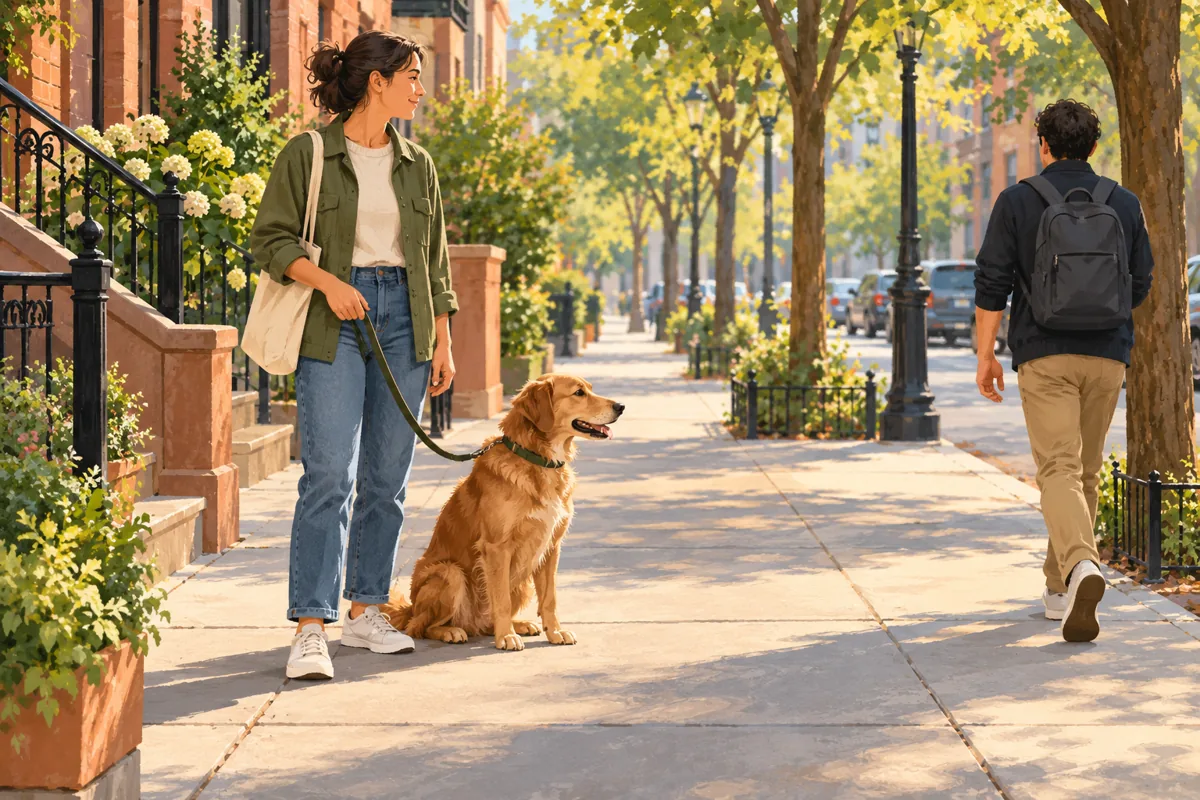
Example scenario, not a customer account: A walker and a medium-sized dog approach a cafe where a queue has spread across the pavement. Another dog is waiting near the entrance. Instead of moving between them, the walker pauses at the previous wide section, gives the dog a familiar attention cue, and chooses the opposite side of the street at a safe crossing. After the busy block, they enter a quieter green space and allow time to sniff.
The point is the decision sequence. The walker notices a narrowing before it becomes a forced greeting, changes the route, and keeps the pleasant exploratory part of the outing. Your route and local crossing rules may call for a different choice.
5. Watch the dog, not just the pavement
A dog who stops taking a familiar reward, repeatedly tries to turn away, stiffens or scans intensely may need more space. The RSPCA's body-language guide encourages owners to notice changes rather than relying on one signal alone. Move away from the pressure where possible and consult a qualified professional for persistent concerns.
It also helps to notice your own pace. If the route leaves no room to pause safely, it may be a poor route for a relaxed walk. Our sniff-walk guide shows how to separate a practical transit section from a slower exploration section.
6. A thirty-second doorway checklist
| Check | Decision before leaving |
|---|---|
| Fit | Harness or collar adjusted on the dog; clip attached and tested. |
| Route | One wide passing spot and one quieter alternative identified. |
| Lead | Length manageable for doors, corners and other pedestrians. |
| Dog | Today's energy, temperature tolerance and known triggers considered. |
| Return | Water, towel and a place for the lead ready at home. |
Need someone else to follow the same route? Put your passing routine and triggers in the dog-walker handover sheet. Specific instructions make a second walker more consistent than “he is usually fine.”
Related reading
This is general care guidance. The cafe example is an invented teaching scenario, not a review, customer story or product test. Follow local rules and seek professional advice for individual health or behavior concerns.